Buy Less, Choose Better: Rethinking the Modern Wardrobe
An expensive label doesn’t guarantee elegance. Discover why fit, craftsmanship and thoughtful choices matter more than the price tag when building a wardrobe worth keeping.
In a world of endless fashion choices, dressing well may have less to do with what we buy and more to do with how we choose.
There is a familiar contradiction in many wardrobes: rails crowded with clothes, drawers struggling to close, and yet the recurring feeling that there is nothing suitable to wear.
A dress bought for an occasion that never materialised. A beautiful pair of shoes that proved too uncomfortable. A designer jacket that looked extraordinary on the mannequin but somehow never quite worked in real life. Each purchase once held the promise of becoming a favourite. Instead, many remain untouched, waiting for the right moment, the right outfit or perhaps a different version of ourselves.
The modern fashion industry offers an extraordinary abundance of choice. New collections, changing trends and carefully curated images encourage us to imagine that the next purchase might finally complete our wardrobes.
But perhaps the question is not what else we need to buy.
Perhaps it is whether we have learnt to recognise what is truly worth owning.
Buying less and choosing better is not necessarily about adopting a minimalist wardrobe or spending more money on luxury clothing. It is about developing a more discerning relationship with fashion — one that considers quality, fit, practicality and the pleasure of wearing something well.
The Wardrobe Paradox: More Clothes, Fewer Choices
A wardrobe can contain dozens of garments and still offer surprisingly few useful combinations.
Part of the problem lies in the way we shop. Individual pieces often attract us for their immediate appeal rather than their place within the clothes we already own.
A striking blouse may be irresistible in a shop, but if it works with nothing else in the wardrobe, its usefulness is limited. An expensive evening dress may be exquisite, yet offer little value if it remains unworn for years.
The Ellen MacArthur Foundation has highlighted the wider consequences of a fashion system in which clothing is frequently underused. Its research into circular fashion emphasises the importance of keeping garments in use for longer, rather than continually replacing them.
For the individual, however, the issue is not only environmental. It is also practical and financial.
Every purchase represents money spent, wardrobe space occupied and another decision to make.
A more considered wardrobe begins with understanding the difference between owning something beautiful and owning something that genuinely works for you.
The Price Tag Is Not the Whole Story
There is a common assumption that expensive clothing must be better clothing.
Sometimes a higher price reflects superior materials, skilled craftsmanship or more demanding construction techniques. A well-made wool coat, for example, may require careful pattern cutting, structured internal components and precise finishing.
But price can also reflect branding, marketing, exclusivity and the prestige associated with a particular label.
A designer name is not, by itself, proof of quality.
Learning to assess a garment independently of its label is therefore one of the most useful skills a shopper can develop.
Begin with the fabric. How does it feel against the skin? Does it have an appropriate weight and drape? Does it recover after being gently handled, or does it appear likely to lose its shape?
Natural fibres such as cotton, wool, linen and silk can offer desirable qualities, but fibre content alone does not guarantee excellence. The quality of the yarn, the way a fabric is woven or knitted, and its finishing all matter. Well-engineered synthetic or blended fabrics can also be the more suitable choice for garments requiring stretch, durability or easy care.
Construction deserves equal attention.
Examine the seams. Are they secure and reasonably even? Do patterns align where the design calls for it? Are buttons firmly attached? Does the zip move smoothly? Does the lining sit comfortably rather than pulling against the outer fabric?
None of these details should be treated as an infallible test. Different garments require different construction methods, and a delicate silk blouse cannot be judged by the same standards as a winter coat.
Nevertheless, paying attention to such details helps us move beyond the assumption that a prestigious label automatically represents a worthwhile purchase.
True quality is found in the relationship between materials, workmanship, purpose and performance.
Dressing for Your Figure: When Fit Matters More Than Fashion
An expensive garment does not automatically create an elegant appearance.
A beautifully constructed designer dress may look disappointing if its cut does not work with the wearer’s proportions. A jacket with an awkward shoulder line can disturb the balance of an otherwise polished outfit. Trousers that gather excessively at the ankle or pull across the hips may undermine the effect of even the finest fabric.
Meanwhile, a modestly priced dress that fits beautifully can look remarkably refined.
The difference is often not the label, but the relationship between the garment and the person wearing it.
This is where understanding your figure becomes valuable.
Dressing well is not about changing your body to accommodate fashion. It is about choosing clothes that work with your body.
Every figure has its own proportions, and garments interact with those proportions in different ways.
A woman with a shorter torso may find that a particular high-waisted trouser changes the balance of her outfit in a way she enjoys, while another woman may prefer a mid-rise cut. Someone with broader shoulders might favour a softly structured jacket, while another person may deliberately choose strong shoulder detailing to create a more architectural silhouette.
Neither approach is universally right or wrong.
What matters is recognising the effect of a garment and deciding whether that effect suits the look you want to achieve.
Understanding silhouette and proportion
A garment’s silhouette is the overall shape it creates.
Consider the difference between a fitted dress, an A-line skirt, wide-leg trousers and a straight-cut jacket. Each introduces different lines and volumes.
The placement of a waist seam can influence the apparent length of the torso. A hemline can change the visual relationship between the upper and lower body. A jacket’s length can either complement or interrupt the proportions of an outfit.
These are not rules that women must obey. They are visual tools that can be used deliberately.
An oversized blazer, for instance, can look wonderfully sophisticated when its volume is intentional and balanced with the rest of the outfit. The same blazer may look less considered when it is simply too large in the shoulders or sleeves.
There is an important distinction between a deliberate design choice and poor fit.
The first expresses intention. The second can make a garment appear as though it belongs to someone else.
The importance of trying clothes properly
When trying on a garment, look beyond the first impression in the mirror.
Sit down. Walk around. Raise your arms. Notice whether the fabric pulls, twists or restricts movement. Check where the shoulders fall, how the waist sits and whether the garment maintains its intended shape as you move.
It is also worth trying more than one size.
Clothing sizes are not consistent across brands, and the number printed on a label is far less important than how the garment actually fits.
A well-fitting outfit should not require constant adjustment throughout the day.
Comfort and elegance need not be opposing qualities.
The overlooked value of alterations
One of the most effective ways to improve a wardrobe is also one of the least glamorous: visiting a good tailor.
Shortening trousers, adjusting a hem, refining a waist or altering sleeve length can make a considerable difference to a garment’s appearance.
A reasonably priced jacket that has been carefully adjusted may look more polished than a far more expensive one worn straight from the shop.
Of course, not every alteration is straightforward. Changing a jacket’s shoulders or substantially restructuring a dress can be costly or impractical. It is wise to establish what can realistically be adjusted before making a purchase.
The essential principle remains simple:
The garment should serve the woman, rather than the other way around.
Buy for the Life You Actually Live
Fashion has a remarkable ability to sell us an imagined lifestyle.
We may be drawn to beautifully styled images of women wearing delicate silk dresses, sharply tailored suits or dramatic eveningwear, even when our everyday lives require something entirely different.
There is nothing wrong with dressing aspirationally. Clothes can be a source of pleasure, confidence and creativity.
But a useful wardrobe must also accommodate reality.
Consider how you spend most of your week.
Do you work in a formal office or from home? Do you travel frequently? Do you walk long distances? Do you live in a warm climate, a cold one or somewhere with changing seasons?
A wardrobe designed for someone else’s routine is unlikely to serve yours particularly well.
The woman who spends much of her day moving between meetings may need elegant clothes that remain comfortable for hours. Someone living in a hot, humid climate may place greater value on breathable fabrics and practical care requirements than on heavy layers.
The most useful pieces are often those that meet several needs without feeling like compromises.
This does not mean every garment must be versatile or practical. A spectacular dress worn only occasionally may still deserve its place if it brings genuine pleasure.
The point is to recognise the difference between a conscious indulgence and an impulse purchase that will quickly be forgotten.
The Real Cost of a Garment
Price tells us what a garment costs to purchase. It does not tell us what that garment will ultimately be worth.
One way to think about value is through cost per wear.
Imagine purchasing a coat for £300 and wearing it 150 times over several years. Its purchase price works out at £2 per wear.
Now consider a £60 jacket worn only three times. That amounts to £20 per wear.
The less expensive item has, in this example, provided far less use for the money spent.
Cost per wear is not a perfect measure. It does not account for maintenance, alterations, resale value or the emotional significance of a garment. Nor should it suggest that everyone can afford to pay more upfront.
Nevertheless, it encourages a useful shift in perspective.
Rather than asking only, “Can I afford this?”, we might also ask, “Will I wear this enough to make it worthwhile?”
Longevity matters for reasons beyond personal finances.
The Ellen MacArthur Foundation advocates designing clothing for physical durability and continued desirability, while supporting repair, resale and other ways of extending use.
But buying something durable is only part of the equation.
A beautifully made coat that remains unworn is not necessarily a better purchase than a simpler garment worn and appreciated regularly.
Value depends on use.
Caring for What You Own
A considered wardrobe does not end at the checkout.
How we care for our clothes influences how long they remain attractive and wearable.
Reading care labels, avoiding unnecessary washing, storing garments appropriately and addressing minor damage before it becomes serious can all help preserve clothing.
Different fabrics have different needs. Knitwear may require careful drying and folding to maintain its shape. Delicate materials may need gentler handling. Leather shoes can benefit from appropriate cleaning, conditioning and repairs.
Sometimes, a missing button or loose hem is all that stands between a neglected garment and a renewed favourite.
The wider fashion industry is also beginning to place greater emphasis on repair, resale and extending product life. Yet these practices are hardly new. Tailors, cobblers, second-hand shops and clothing alterations have served generations of customers.
Perhaps what is changing is our willingness to recognise their value again.
There is a particular satisfaction in owning something long enough for it to become familiar — a coat that has accompanied many winters, a beautifully cut pair of trousers or a handbag whose appeal has survived changing trends.
Such pieces develop a history that no new purchase can immediately replicate.
A More Considered Way to Shop
Becoming a more discerning shopper does not require an elaborate system.
It begins with asking better questions.
Before buying something new, consider whether you can imagine wearing it on several real occasions. Think about the clothes and shoes you already own, and whether the new piece works naturally alongside them.
Examine the quality without being distracted by the label.
Try it on properly. Notice the fit, the proportions and the way it feels when you move.
Consider whether the fabric and care requirements are realistic for your lifestyle.
And perhaps most importantly, ask yourself whether you genuinely love the garment — or simply love the idea of owning it.
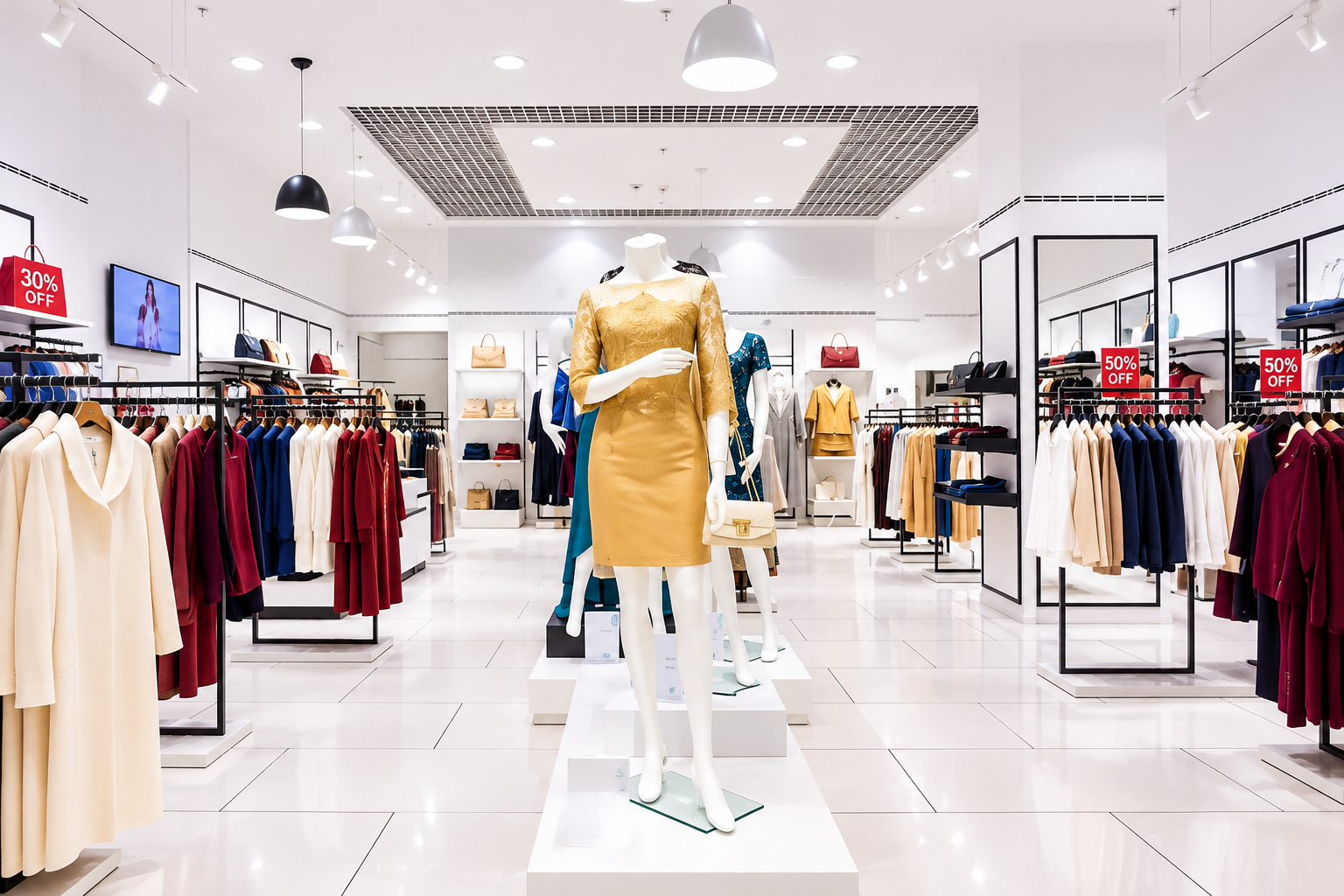
Sales and discounts deserve particular caution. A reduced price can make an unnecessary purchase feel sensible, even when the garment was never something you intended to buy.
A bargain is only a bargain when it offers genuine value.
The same principle applies to trends. There is no reason to reject them entirely. Fashion should remain enjoyable, and experimenting with a new silhouette or colour can be refreshing.
But not every trend needs to become part of your wardrobe.
Choosing well sometimes means recognising that something beautiful is simply not for you.
A Wardrobe That Feels Like Yours
There is no universally perfect wardrobe.
For one woman, it may contain beautifully tailored separates and understated colours. For another, vibrant prints, sculptural dresses and expressive accessories may be essential.
Neither approach is inherently more sophisticated.
Nor does dressing well require an expensive collection of clothes. It requires attention to what suits you, what you enjoy wearing and what deserves a place in your life.
A thoughtful wardrobe is not necessarily small. It is simply one in which purchases are made with greater intention.
It leaves room for practicality and pleasure, for reliable favourites and unexpected discoveries.
Most importantly, it reflects an understanding that style cannot be purchased through labels alone.
The finest garment is not always the most expensive, the most fashionable or the most admired by others.
Sometimes, it is simply the one that fits beautifully, feels entirely right and makes you wonder why you ever needed so many alternatives.
Buying less is not about having less to enjoy. It is about choosing more of what truly works.